

China to launch underwater data center for greener computing
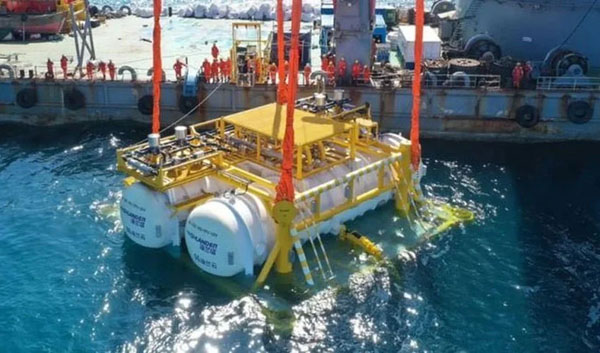
AC hinese tech firm is preparing to submerge a pod of servers off the coast of Shanghai. The underwater data center, set to launch in mid-October, could mark a turning point in sustainable technology—but experts warn of major ecological and technical challenges ahead.
On a wharf near Shanghai, engineers are putting finishing touches on a large yellow capsule that will soon rest beneath the sea. The structure is being developed by maritime equipment company Highlander in collaboration with state-owned construction firms.
“Underwater operations have inherent advantages,” explained Yang Ye, vice president of Highlander. He said the project could save up to 90 percent of the energy typically used to cool servers.
By using naturally cold ocean currents instead of traditional air or water cooling, these undersea data centers aim to drastically cut the carbon footprint of modern computing—especially as artificial intelligence continues to drive massive power demands.
While the concept isn’t entirely new—Microsoft tested an underwater data center off Scotland in 2018—the Chinese initiative is among the first commercial deployments of its kind.
The Shanghai facility will serve major clients, including China Telecom and a state-owned AI computing company, and forms part of Beijing’s broader push to lower the environmental impact of data infrastructure.
Microsoft’s experiment concluded in 2020, having proven the idea’s feasibility, but the tech giant did not pursue it commercially. Experts say China’s government support, including a 40 million yuan ($5.62 million) subsidy for Highlander’s previous Hainan project, is giving the concept new momentum.