
A Meeting with Prime Minister Shehbaz Sharif – Pakistan’s Gains in 2025 — and the Challenges Ahead in 2026
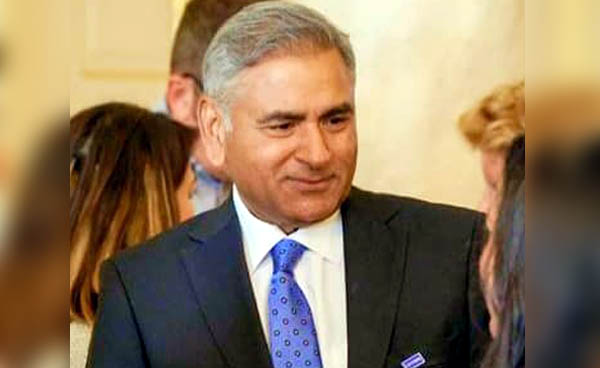
By Dr Ashraf Chohan
Chairman PMLN UK
Chief Editor Daily Rapid Lahore
I recently had the opportunity to meet the Prime Minister of Pakistan, Shehbaz Sharif, at the Pakistan High Commission. I found him composed, confident, and notably clear in his thinking. He articulated—calmly yet convincingly—how Pakistan has, over the past year, built a coherent and credible narrative on the global stage and achieved tangible diplomatic success.
He praised his elder brother the leader of PMLN Nawaz Sharif whose vision is the guide for him. He said.
Having known the Prime Minister personally for over two decades, I have observed his administrative abilities at close quarters. What stood out in this meeting was a mature “hybrid” clarity: political awareness fully aligned with institutional understanding. He spoke with confidence about inter-institutional harmony—an alignment between civilian leadership and state institutions that has been rare in Pakistan’s recent past, yet is now visibly shaping outcomes.
Pakistan’s Gains in 2025: A Year of Strategic Stabilisation
In my assessment, Pakistan’s relative success in 2025 rests on two pillars: competent political leadership and professional military stewardship, underpinned by mutual trust and a shared development agenda. Key gains include:
• Diplomatic rehabilitation: Improved engagement with major global and regional powers, restoring Pakistan’s seriousness and predictability as a state actor.
• Institutional harmony: Reduced friction between civilian and security institutions, enabling continuity in policy and execution.
• Improved security environment: Better internal stability, creating space for economic and diplomatic activity.
• Renewed investor confidence: Cautious but visible return of international interest, particularly from friendly states and multilateral partners.
• Narrative reset: Pakistan increasingly presenting itself as a reform-oriented, cooperative country rather than a perpetual crisis state.
This progress is not accidental. It reflects disciplined leadership and an understanding that governance, security, and diplomacy must move in the same direction.
2026: The Persistent Economic Challenge
Despite these achievements, the central challenge for 2026 remains economic. Political stability alone cannot carry a country forward without deep financial reform.
Punjab—home to nearly 64% of Pakistan’s population—offers an instructive case. Under Maryam Nawaz, early results are visible: improvements in security, public confidence, women’s empowerment initiatives, poverty alleviation, cleanliness drives, and health-sector responsiveness. This is an encouraging start, but it is precisely that—a beginning. Scaling these reforms nationally will require sustained fiscal capacity.
Trade Balance: Imports, Exports, and Structural Weakness
Pakistan’s economic stress is rooted in a chronic trade imbalance. Imports—especially energy, machinery, and essential commodities—continue to outpace exports. While exports have shown modest growth, they remain narrow in range and low in value addition. Without diversification into higher-value manufacturing, technology, and services, foreign exchange pressures will persist.
Taxation: The Core Structural Reform
Tax collection remains Pakistan’s weakest economic link.
• Extremely narrow tax base: Only a small fraction of the population pays direct taxes.
• Large informal economy: Entire sectors—retail, real estate, agriculture trading, and services—remain outside effective taxation.
• Wealth concentration: Significant assets exist, but are poorly documented and lightly taxed.
• Weak enforcement and leakages: Inefficiencies, corruption, and bureaucratic barriers reduce actual collection far below potential.
Yet, the opportunity is equally large. With digitalisation, documentation of the economy, real-time transaction tracking, and political will, Pakistan could dramatically expand its tax base. Even a modest broadening—bringing traders, high-value agriculture, and service providers into the net—could transform state revenues.
Outlook: What Are Pakistan’s Chances?
In my considered opinion, Pakistan has a realistic and achievable opportunity over the next few years to:
• Significantly increase tax collection through base expansion rather than higher rates.
• Improve trade balance by supporting value-added exports and reducing non-essential imports.
• Strengthen international exports by aligning diplomacy with commerce and industry.
Success is not guaranteed—but for the first time in years, the direction is coherent. If institutional harmony is maintained and economic reform pursued with the same seriousness as diplomacy and security, Pakistan’s chances of sustainable recovery are better than they have been in a long time.
The challenge of 2026 is therefore not vision—but execution.