
The Strategy of Destabilisation and Pakistan

Field Marshal Asim Munir’s Lunch with Trump: A Subtle Trap?
A Geopolitical Analysis
By Dr Ashraf Chohan
Chairman PMLN UK
Chief Editor Daily Rapid Lahore
In recent years, voices like Jeffery Sachs’s Giani Sylwatore and others have raised urgent concerns over what appears to be a coordinated effort by the United States and Israel to weaken Muslim-majority nations, one after another.
Bill Clinton has confirmed that Netanyahu has always wanted wars against Islamic block and Trump should not support it
From Iraq to Libya, Syria to Iran, the pattern is difficult to dismiss. Some fear that Pakistan may be next, through diplomatic entrapment, economic pressure, and internal destabilisation and may be through war
A Pattern of Destruction?
- Iraq was dismantled through a fabricated war.
- Libya, once Africa’s most prosperous state, was reduced to tribal anarchy.
- Syria has been fractured and drained in a proxy war involving dozens of foreign players.
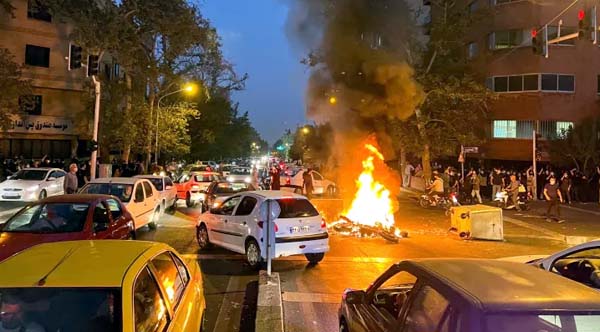
- Iran remains under sanctions, sabotage, and psychological pressure.
- Pakistan, geographically critical and strategically important, is now facing renewed Western attention.
Politics, Finance & Pro-Israel Power in the U.S.
Political Control:
- Organisations like AIPAC dominate American Middle East policy discourse.
- Campaign donors linked to Israeli interests wield influence in both Democratic and Republican circles.
- Every U.S. presidential candidate is almost expected to pledge unconditional support to Israel.
Financial & Media Power:
- Major financial institutions, media conglomerates, and tech industries are influenced by pro-Israel leadership or policy perspectives.
- Pro-Israel editorial lines dominate U.S. media, shaping Western public opinion in Israel’s favour.
Some Jewish individuals and intellectuals oppose Israeli excesses and support justice for Palestine and regional peace but the problem lies in political Zionism and its growing influence in US UK and Europe
Trump, the U.S., and the Strategic Obligation to Israel
Donald Trump’s presidency marked an unprecedented pro-Israel shift:
- Withdrawal from the Iran Nuclear Deal
- Recognition of Jerusalem as Israel’s capital
- Recognition of the Golan Heights
- Orchestration of the Abraham Accords
- Assassination of Iran’s General Qassem Soleimani
These moves weren’t simply political. They were strategically crafted to ensure Israel’s dominance by eliminating threats one by one, especially Iran. Iran’s military and ideological support to Hezbollah, Syria, and Palestine made it Israel’s top target. Trump openly aligned American Middle East policy to Israel’s vision of regional dominance.
General Asim Munir’s Lunch with Trump: A Subtle Trap?
In the midst of the current Iran-Israel conflict, the reported lunch between General Asim Munir and Donald Trump carries symbolic and strategic weight. According to sources, Trump hosted this high-level engagement to pull Pakistan away from any possible support to Iran, and to ensure Islamabad remains neutral if regional war intensifies.
The meeting may appear cordial, but history warns us otherwise.
The U.S. Pattern with Pakistan: Use, Discard, Repeat
- Used in the Cold War, discarded after Soviet withdrawal from Afghanistan.
- Used post-9/11, blamed for failure in Afghanistan and humiliated.
- Promised strategic partnership, but sided openly with India on many fronts.
- Denied military aid, placed on grey lists, and constantly pressured through IMF conditions.
Now the question arises: Why would this time be any different?
The current engagement seems aimed at:
- Isolating Iran from all remaining allies,
- Preventing any Shi’a-Sunni strategic bridge from forming,
- Monitoring or slowing down China’s corridor through CPEC, and
- Possibly positioning India as a front line tool in future regional confrontation.
The Danger Ahead: Pakistan Must Not Fall Into Another Trap
While diplomacy is essential in both peace and war, Pakistan must not be entrapped again by a short-term Western embrace.
- After Iran, Pakistan may be next.
- A pro-Israel government forcibly installed in Iran will isolate Pakistan.
- Any pro-Western shift in Islamabad will make Pakistan a vulnerable pawn, not a player.
- Once the U.S. achieves its strategic objective, it will discard Pakistan again, as history has shown.
Strategic Options for Pakistan
- Security Pacts
- Deepen military coordination with China and Russia.
- Revive defence exchanges and intelligence agreements to protect national sovereignty.
- Engage India for Peace
- Despite recent tensions, engage India in a regional peace dialogue.
- Prevent the U.S. or Israel from using India’s grievance over the Iran-Israel war as a trigger against Pakistan.
- Use Hybrid Stability Wisely
- Pakistan’s current hybrid government offers stability.
- This must be used to build local resilience, regional friendships, and economic autonomy, not to chase foreign praise.
- Warn the Neighbours
- Quietly communicate to China, Central Asia, and Turkey that the fall of Iran will lead to the fall of Pakistan, and eventually to China’s own regional setbacks.
Final Reflection
The winds of war are rising in the Middle East, and while peace is the ideal, clarity must guide diplomacy. The U.S.–Israel alliance is not built on values but on shared strategic goals. Pakistan has been used before, and will be used again—unless it wakes up now.
As Allama Iqbal warned:
“Na samjho ge to mit jao ge ae Hindustan walo,
Tumhari daastan tak bhi na hogi daastanon mein.”
Let us rise not with anger, but with awareness. Not with emotion, but with preparation. Let us ensure that Pakistan never becomes a used card in someone else’s game again.
Dr Ashraf Chohan is a British-Pakistani physician, policy analyst, and community leader with over three decades of experience in healthcare and international affairs. As Chairman of Conservative Friends of the NHS (UK) and a seasoned voice on South Asian and Middle Eastern geopolitics, he has authored numerous thought pieces on diplomacy, defence strategy, and global Muslim affairs.
Dr Chohan is known for his balanced, realist approach to complex international issues, combining deep knowledge of history with a sharp understanding of current global power dynamics. He regularly engages with senior politicians, diplomats, and policy thinkers in the UK, Middle East, and South Asia.
A passionate advocate for sovereign dignity, Muslim unity, and regional peace, Dr Chohan’s writings reflect a commitment to justice, strategic foresight, and protecting the autonomy of vulnerable nations.