
Pakistan’s Present Wave of Terror and the Need forNational Unity

By Dr Ashraf Chohan
Chairman PMLN UK
Chief Editor Daily Rapid Lahore
Pakistan today faces a renewed wave of terrorism, emerging mainly from its western border. This tragic cycle of violence, foreign interference, and extremist resurgence threatens the very peace and progress that the nation has worked so hard to rebuild. It is vital, therefore, that all citizens, political leaders, and state institutions unite behind one principle — the preservation of law, order, and national integrity.
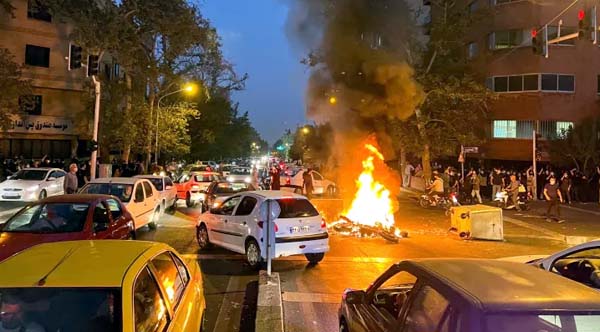
Every region of Pakistan has elected representatives — MNAs and MPAs — entrusted with the responsibility to raise people’s voices through constitutional and democratic channels. When legitimate political concerns are discussed in Parliament, they gain strength, credibility, and direction. But when individuals or groups take to the streets with violence, defying law enforcement, attacking police, or attempting to disrupt governance, they undermine democracy itself. No nation can progress when chaos replaces law and mob behaviour replaces dialogue.
The recent Gaza peace deal is a remarkable international success and a victory for diplomacy. It proves that peace — even after immense suffering — is possible through negotiations and persistence, not destruction. Pakistan, too, must learn from this. The demand of the peaceful world has been the stoppage of killing, and that principle applies equally within our own borders.
Throughout Pakistan’s history, there have been many violent and pressure-driven groups — whether in the 1970s, 1980s, or more recent decades. Each time, these groups brought suffering to ordinary citizens and delayed national progress. Today’s violent elements, often backed by foreign funding and interests, are no different. They seek to destabilise the state, weaken institutions, and divide the people for external agendas. The current government, under Prime Minister Shehbaz Sharif and General Asim Munir, has demonstrated firm resolve to eliminate these threats. Their coordinated civil-military strategy aims to dismantle every militant network operating inside or across the border. This determination is not political — it is national. Pakistan must not allow anothergeneration to be lost to the fires of extremism.
Peace is not just a moral or political goal — it is an economic necessity. Without internal stability, investment dries up, inflation worsens, and the cost of living rises for every household. Security and prosperity are two sides of the same coin; one cannot exist without the other. The path to peace, therefore, is the path to economic recovery and national strength.
Pakistan stands at a defining moment. The choice is clear — law over lawlessness, Parliament over protest, dialogue over destruction, and peace over terror. The government’s responsibility is to protect its citizens, and the citizens’ duty is to stand with their state. Only through unity and discipline can we preserve Pakistan’s stability and honour in the region and the world.