
Iran Unrest Deepens
By Dr Ashraf Chohan
Chief Editor Daily Rapid Lahore
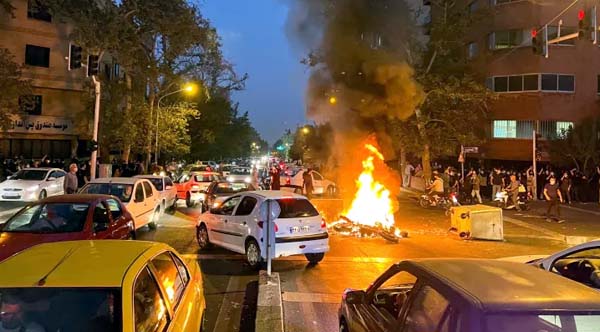
Iran has been gripped by its most serious unrest in years, with protests that began amid a steep economic shock—driven by currency weakness and rising living costs—spreading into wider anti-government demonstrations. Rights monitors say the crackdown has been severe: HRANA has reported 500+ deaths and around 10,000 arrests over roughly two weeks, figures Reuters notes it cannot independently verify, while Tehran has not published official totals.
On the streets, accounts from activists and human-rights groups describe live fire, mass detentions, and pressure on families around burials—elements that can both frighten crowds and harden resolve. The state’s narrative has been consistent: officials portray unrest as “rioting” encouraged by foreign adversaries, and security forces as defending public order.
Chances of escalation now hinge on three factors: (1) whether protests broaden into sustained strikes in strategic sectors; (2) whether the security response intensifies further; and (3) whether external pressure becomes more direct. The government has already shown willingness to tighten communications and deploy force, which historically can suppress mobilisation in the short term—but also risks producing new flashpoints if deaths mount or revered institutions fracture.
US and Israel involvement is the most combustible variable. Publicly, Washington has voiced support for demonstrators, while reporting suggests the Trump administration has discussed options that could include cyber measures or other coercive tools; Tehran, for its part, has warned that US troops and Israel could become legitimate targets if America intervenes. This rhetorical escalation raises the risk of miscalculation: even limited cyber operations can trigger retaliation in the Gulf, Iraq, Syria, or via maritime harassment—domains where Iran often seeks deniable leverage.
On Iran’s defence capabilities, Tehran’s strengths remain asymmetric and missile-centric: large inventories of ballistic and cruise missiles, a mature drone program, proxy partnerships, and naval forces optimised for the narrow waters of the Gulf and Strait of Hormuz. But analysts also note constraints—especially exposed air-defence architecture and vulnerabilities highlighted in past Israel–Iran exchanges—meaning Iran may prefer retaliation that is indirect, distributed, and politically deniable rather than a conventional fight.
Likely future: a near-term path of grinding unrest and heavy policing, with periodic spikes around funerals, anniversaries, or economic announcements. If strikes expand and elite cohesion shows visible cracks, pressure on the leadership rises sharply; if not, the state may regain tactical control while deeper legitimacy and economic problems persist. Either way, the situation is entering a dangerous phase where domestic crisis and regional brinkmanship increasingly feed each other.